

The ECOWAS Court has recently delivered a ruling in favor of Ghana, dismissing former Chief Justice Torkonoo’s claims in their entirety. The Court determined that no violations of rights had taken place, and consequently, she was not entitled to her claim for $10 million.
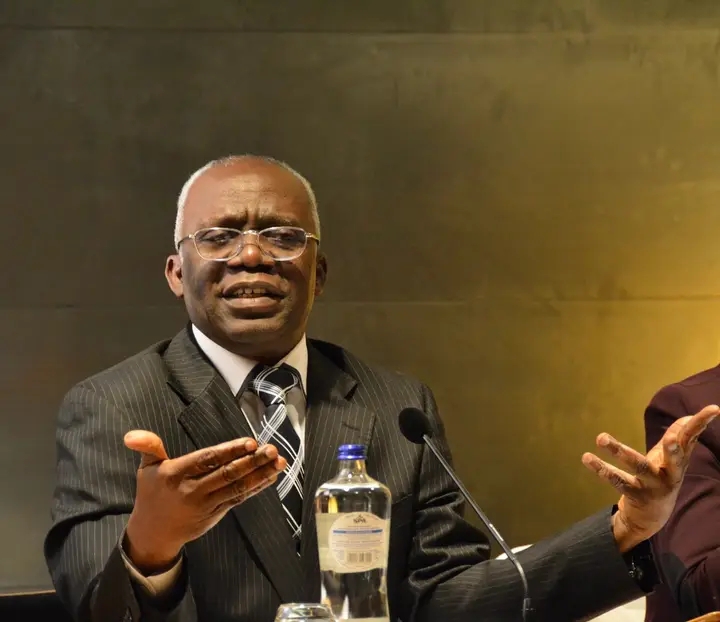
Ghana’s case was presented and argued by the Deputy Attorney-General, Dr. Justice Sai, while the former Chief Justice was represented by the renowned Senior Advocate of Nigeria, Femi Falana.
Following the judgment, Femi Falana expressed his dissatisfaction, suggesting that the judgment should be disseminated to ensure that judges in the sub-region are aware that they cannot rule against their governments. The Court deemed Mr. Falana’s conduct and remarks as “unacceptable” and expressed its disappointment.
The Court was notably impressed by the submissions and arguments put forth by Justice Sai and upheld all of them. The Court ruled as follows:
1. The suspension of the Chief Justice did not infringe upon her right to work. The Court rejected Torkonoo’s claim that her suspension was arbitrary and motivated by ill will.
2. Torkonoo was not dismissed arbitrarily. The Court found that due process had been observed.
3. The Chief Justice’s assertion that she should have been removed separately from the Supreme Court, Court of Appeal, and High Court was deemed absurd. The Court opined that her membership in these courts stemmed from her position as Chief Justice, and once she was no longer Chief Justice, she could not claim membership in these separate courts.
4. The Court dismissed Torkonoo’s claim that her removal was unlawful due to the Committee considering only the first petition and not the subsequent ones. The Court concluded that the Committee acted prudently in the interest of judicial economy.
5. The Court rejected Torkonoo’s claim of being subjected to undignified treatment, including being searched and the exclusion of her husband and family from attending events. It also dismissed concerns regarding the choice of Adu Lodge, finding that the measures taken to secure the proceedings were lawful and proportionate.
6. The claim that the Committee violated her rights by continuing with the removal proceedings, despite an application for provisional measures to suspend them, was rejected.
7. The Court held that Ghana did not violate Torkonoo’s right to receive information about the proceedings. Although Torkonoo is entitled to the full report and record of proceedings, she had not demonstrated that she had requested the full report before proceeding to court.