

The Free Senior High School (Free SHS) policy was introduced to ensure that every Ghanaian child, regardless of financial background, has access to secondary education.
The policy has significantly expanded access to education and remains one of the most important social interventions in Ghana’s history.
However, recent events have reignited the debate over whether affluent families should continue to benefit from the policy in the same way as financially disadvantaged households.
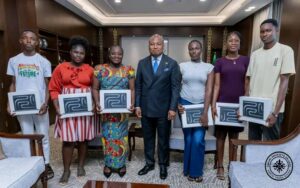
The core objective of Free SHS is to remove financial barriers to education. Therefore, when some parents can purchase vehicles and other luxury items for their children upon completion of WASSCE, questions naturally arise as to whether such families require the same level of government support as less privileged households.
Government resources are limited.
Directing educational subsidies toward students from genuinely needy backgrounds would ensure that public funds are used more efficiently and equitably.
Families with the financial capacity to pay school fees and related expenses could reasonably be expected to contribute toward the education of their wards.
A more targeted approach could provide several benefits:
1. Reduce the financial burden on the state.
2. Free resources for improving school infrastructure and teaching materials.
3. Enhance teacher welfare and motivation.
4. Expand scholarships and support services for disadvantaged students.
5. Improve the long-term sustainability of the Free SHS programme.
Social intervention programmes are generally most effective when they reach their intended beneficiaries. Providing identical levels of support to both wealthy and poor households may not always achieve the greatest social impact.
Supporters of universal Free SHS argue that every Ghanaian child deserves equal access to educational opportunities regardless of family income. This remains a valid position and reflects the principle of inclusiveness that underpins the policy.
Nevertheless, there is a strong case for reviewing the current structure of Free SHS to ensure that limited national resources are directed toward those who need them most while preserving the gains made in educational access.
As stated in Mark 2:17, “It is not the healthy who need a doctor, but the sick.” Likewise, public assistance is often most effective when focused on those facing the greatest need.
The conversation should therefore not be about whether Free SHS should continue, but rather about how it can be made more efficient, equitable, and sustainable for future generations.
Thank you.
OKAI ATTAKORAH GIBSON
Educationist,
Former NDC Constituency Secretary, Ejura Sekyedumase Constituency
Contact: 0249388866 / 0209078056
NB: One caution: using a visible sign of wealth (such as gifting a car) as the sole criterion for exclusion could be controversial, since some families may make one-time sacrifices or receive support from extended family members. A policy based on verified income and assets would generally be considered fairer than judging eligibility from a single purchase.