


Farmers participating in the Weta Irrigation Scheme (WIS) have formally requested the Government to expedite the rehabilitation of the facility, cautioning that years of neglect, coupled with recent catastrophic flooding, have brought the scheme to a critical state of disrepair.
Mr. Gideon Kokoroko, representing the farmers at a press conference in Weta on Tuesday, articulated that the declining condition of the irrigation scheme poses a significant threat to food security, rice production, and the livelihoods of thousands of farming households in the Ketu North Municipality and surrounding areas.
He noted that the Weta Irrigation Scheme, previously known as the Afife Irrigation Project, was established with assistance from the Government of China between 1979 and 1982 and was commissioned for agricultural use in 1983.
According to Mr. Kokoroko, the scheme has played a vital role in rice and vegetable production in the Volta Region and across Ghana, with the capacity to yield over 10,000 metric tonnes of rice annually from its 880 hectares of irrigable land.
However, he emphasized that the facility has not undergone any substantial rehabilitation since its inception over four decades ago, despite technical recommendations indicating that such rehabilitation should have occurred more than 20 years prior.
He explained that prolonged neglect has led to the deterioration of essential irrigation infrastructure, diminishing productivity and subjecting farmers to escalating losses.
Mr. Kokoroko recalled that in 2023, officials from the Ghana Irrigation Development Authority (GIDA) announced that the scheme had been earmarked for rehabilitation under the $150 million World Bank-supported West Africa Food System Resilience Programme (FSRP).
Nevertheless, he stated that farmers have yet to observe any meaningful rehabilitation efforts or the mobilization of equipment to the site, three years following the announcement.
He also mentioned that on July 4, 2025, the Deputy Minister for Food and Agriculture, Mr. John Dumelo, along with the Member of Parliament for Ketu North, Mr. Eric Edem Agbana, visited the scheme after severe flooding and assured affected farmers of government support.
However, he noted that these assurances have not translated into the necessary interventions, while the condition of the irrigation infrastructure continues to deteriorate.
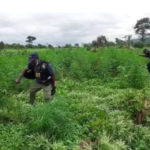
Mr. Kokoroko indicated that recent heavy rains have resulted in extensive flooding, devastating large areas of rice farms and obliterating farmers’ investments, livelihoods, and aspirations.
He elaborated that the collapse of the primary protective dyke has left the entire irrigation scheme vulnerable to ongoing flooding, rendering farming activities increasingly perilous.
He added that critical components of the facility, including the main canals, laterals, sub-laterals, feeder channels, control gates, and access roads, have all significantly deteriorated.
“The Weta Irrigation Scheme is currently in a state of collapse. Without immediate intervention, any individual who engages in rice farming on the scheme does so at considerable risk,” he stated.
Mr. Kokoroko cautioned that the potential failure of the scheme, regarded as one of Ghana’s largest irrigation projects, would adversely impact thousands of farming families and undermine national efforts to enhance food production, reduce rice imports, and generate employment opportunities for youth.
The farmers have appealed to President John Dramani Mahama for urgent intervention to ensure a comprehensive rehabilitation of the facility.
They have called for the reconstruction of the collapsed dyke, canals, control gates, and access roads, emergency support for farmers affected by the floods, and the establishment of a sustainable maintenance program to safeguard the scheme for future generations.
Mr. Kokoroko also urged the World Bank’s Ghana Office to ensure that funds allocated under the Food System Resilience Programme are released and utilized for the intended rehabilitation efforts.
He asserted that restoring the Weta Irrigation Scheme would rekindle hope among farmers, enhance rice and vegetable production, create jobs, and significantly contribute to Ghana’s food security agenda.
Mr. Kokoroko expressed gratitude to traditional authorities, the media, stakeholders, and individuals who supported the press conference, reaffirming the farmers’ commitment to collaborating with the government and development partners to restore the scheme to full operational capacity.
Credit to Access Agric