


Hon. Eric Opoku Addresses Misunderstandings Regarding the Government’s Nkokɔ Nkitinkiti Initiative
For several weeks, the term _Nkokɔ Nkitinkiti_ has gained significant attention in markets, lorry parks, and radio talk shows throughout Ghana. Loosely translated as “Small Chickens, Big Impact,” the government’s poultry initiative has emerged as one of the most discussed and frequently misinterpreted agricultural programs of the year.
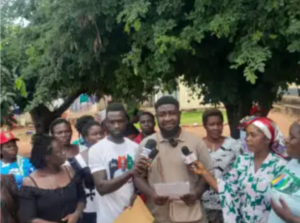
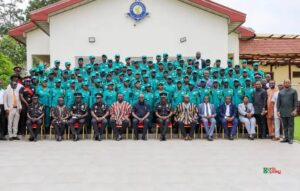
On Tuesday, Minister of Food and Agriculture, Hon. Eric Opoku, took the opportunity to clarify misconceptions surrounding the initiative. During a town-hall meeting with poultry farmers, youth groups, and local chiefs in Kumasi, he emphasized that the surrounding noise was overshadowing the actual objectives of the program.
The primary misconception, according to Hon. Opoku, is that _Nkokɔ Nkitinkiti_ is merely a handout initiative.
“Some individuals believe that the government will simply deliver 10 chicks to their doorstep and then withdraw,” he stated to a crowded audience at the Kumasi Cultural Centre. “That is not the intended model. If we sought a photo opportunity, we could have accomplished that in 2020. This initiative aims to establish a sustainable poultry value chain.”
The Ministry has indicated that the initiative aims to reach 500,000 households nationwide over the next three years, with a particular emphasis on women, persons with disabilities, and unemployed youth in both rural and peri-urban areas. Beneficiaries will not only receive day-old chicks but will also be provided with:
Before any chicks are distributed, beneficiaries are required to undergo a two-week practical training program with Ministry extension officers and certified agro-veterinarians. The curriculum encompasses brooding, feed formulation utilizing local ingredients such as maize and soy, disease management, record-keeping, and marketing.
Each approved household will receive 25 improved Kuroiler day-old chicks, feed for the initial six weeks, essential vaccines, a poultry manual in Twi, Ga, Ewe, and English, as well as access to a toll-free veterinary hotline.
The Ministry is collaborating with aggregators, school feeding programs, and cold-storage operators in Kumasi, Accra, and Tamale to facilitate the buyback of mature birds at a negotiated minimum price. The objective is to eliminate the cycle in which farmers raise birds but are unable to sell them.
Hon. Opoku elaborated on the significance of the initiative’s name. “_Nkitinkiti_ signifies that we are starting small, allowing individuals to manage it effectively. Not everyone can operate a 10,000-bird farm from the outset. However, 25 well-managed birds can provide a family with additional income within 12 weeks. If this is repeated twice a year, it can significantly alter one’s financial situation.”
He referenced pilot data from Offinso and Ejura, where 1,200 households reported an average profit of GHS 1,850 per cycle after accounting for feed and medical expenses. Many beneficiaries utilized these funds to cover school fees and replenish their resources.
Addressing Common Misconceptions
Three prevalent false claims have circulated on social media, which the Minister addressed individually:
1. “It is exclusively for NDC party members.”
“False,” Opoku stated unequivocally. “District Assemblies, traditional authorities, and faith-based organizations are part of the selection committee. The list will be displayed on every District Assembly notice board. If your name is absent and you meet the criteria, you may appeal.”
He noted that each district will have two designated extension officers and a mobile veterinary team.
Beneficiaries will also be organized into clusters of 20 for peer learning and collective feed purchasing.
3. “The government will reclaim the birds.”
“No,” he responded with a laugh. “Once the birds are handed over following training, they belong to you. The government’s return comes in the form of taxes as you grow, job creation as you expand, and reduced chicken imports as we enhance local production.”
The Broader Implications for Ghana
According to Ministry data, Ghana currently imports over $200 million worth of frozen chicken annually. The _Nkokɔ Nkitinkiti_ initiative aims to reduce this expenditure by increasing local production by 30% within five years.
“This initiative represents import substitution at the household level,” Opoku remarked. “If 500,000 households can produce even 20 birds annually, that equates to an additional 10 million Ghanaian chickens on local tables. This means more money remaining within the country.”
He also connected the program to job creation beyond the farm, including opportunities for feed millers, transporters, vaccinators, egg traders, and processors.
Registration for the inaugural Ashanti Region cohort will commence next month at all 43 District Agriculture Directorates. Eligibility requirements are straightforward: possession of a Ghana Card, basic literacy, and a commitment to participate in training. Priority will be given to women-headed households and youth aged 18-35 who are not engaged in formal employment.
Nana Akosua Serwaa, a food vendor from Bantama who attended the meeting, expressed initial skepticism. “I thought it was politically motivated. However, once he clarified the training and market aspects, it became clear. If I can rear birds and supply my chop bar without purchasing from importers, why not?”
Hon. Opoku concluded the session.