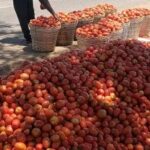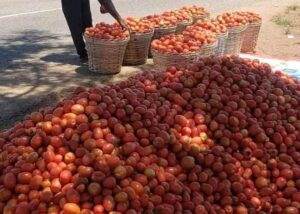



Tomato traders at the Asafo and Roman Hill markets in Kumasi have urged the Government to implement immediate measures aimed at revitalizing Ghana’s tomato industry. This initiative is essential to ensure year-round local production, stabilize prices, and reduce reliance on imports.
The traders emphasized that sustained investment in the sector would guarantee a consistent supply of tomatoes, enhance marketing opportunities, and bolster food security nationwide.
In separate interviews with the Ghana News Agency (GNA), the traders noted that while Kumasi is one of the country’s principal commercial centers for tomato trading, declining local production has compelled many traders to depend on supplies from neighboring countries, particularly during periods of scarcity.
They reported that this year’s tomato shortage has been exacerbated by heavy rains, which have devastated farms in key producing regions, resulting in diminished supplies and significant price increases.
Furthermore, they highlighted that traders who previously traveled to Burkina Faso to procure tomatoes are now unable to do so, further aggravating the supply crisis.
The traders attributed the decline in local production to escalating production costs, recurring pest and disease outbreaks, insufficient irrigation facilities, and unpredictable weather conditions, which have forced many farmers to reduce their acreage or abandon tomato cultivation entirely.
Madam Ama Agyeiwaa, a tomato trader at the Asafo Market, stated that the shortage is impacting not only traders but also restaurants, chop bars, food vendors, and households that rely on fresh tomatoes for daily meals.
She called on the Government to enhance irrigation infrastructure in major tomato-growing communities to facilitate year-round cultivation and lessen dependence on rainfall.
Additionally, she advocated for improved access to disease-resistant tomato seeds and affordable fertilizers to assist farmers in increasing productivity and enhancing the quality of their produce.
Madam Ataa Yaa, another trader, urged the Government to invest in technologies that would enable tomato cultivation during the rainy season.
“Tomatoes are a vital ingredient in nearly every household, so we require innovative farming methods that will ensure continuous production throughout the year,” she remarked.
The traders further appealed for enhancements in road infrastructure connecting farming communities to major markets to decrease transportation costs and minimize post-harvest losses.
They also called for the establishment of modern cold storage facilities to preserve fresh tomatoes during periods of abundance and reduce spoilage.
Moreover, they advocated for the development of a robust tomato processing industry to provide a stable market for farmers and protect them against price fluctuations during bumper harvests.
The traders urged financial institutions to create affordable credit facilities for tomato farmers and market women, enabling them to expand their businesses and improve productivity throughout the value chain.
They encouraged young individuals to engage in commercial tomato farming, emphasizing that government support through mechanization, irrigation, and access to credit would enhance the sector’s attractiveness and profitability.
The traders also recommended backyard tomato cultivation to help households supplement supplies during times of scarcity.
They appealed to the Ministry of Food and Agriculture to strengthen extension services by intensifying farmer education on climate-smart agriculture, modern production techniques, and effective pest and disease management.
The traders underscored the necessity for stronger collaboration among farmers, traders, processors, and transport operators to enhance efficiency across the tomato value chain and ensure a steady supply of the commodity throughout the year.
By Dorothy Frances Ward, GNA
Source: Access Agric