

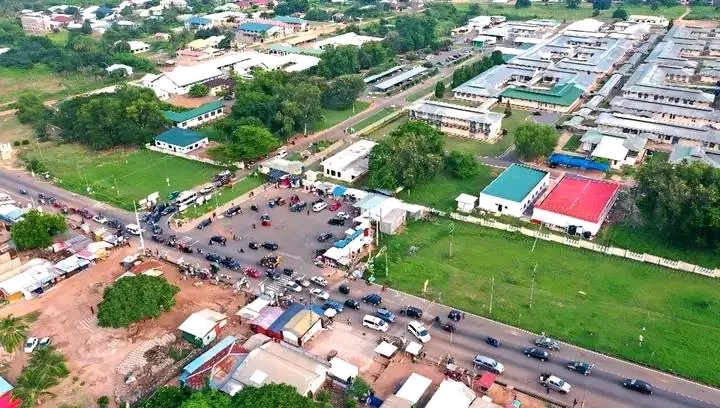
A Comprehensive Journey through History, Heritage, People, and Identity
It is often stated that one cannot truly comprehend the entirety of Ghana without visiting the Volta Region, a locale that transcends mere geographical significance within the country. The Volta Region of Ghana serves as an open-air museum where history, heritage, tradition, nature, and resilience are abundantly present. It is a place where mountains and the sea converge, where ancient traditions persist, and where hospitality is an intrinsic aspect of the culture.
Situated in the eastern part of Ghana, the Volta Region has Ho as its capital and shares an international boundary with Togo. It stretches from the picturesque coast of the Atlantic Ocean in the southern part of Ghana to the majestic mountains and forests in the northern part of the country.
The Volta Region holds particular significance due to its involvement in one of Africa’s greatest migrations. The predominant ethnic group in the region, the Ewes, have preserved an oral tradition for centuries, tracing their lineage through various migrations from regions that are now Ethiopia, Nigeria, Benin, to Notsie in present-day Togo, and eventually settling in what is now Ghana. The narrative of their exodus from Notsie under the rule of King Agorkoli is a pivotal aspect of Ewe history.
What sets the Volta Region apart from other regions is that history is not confined to written records. It is brought to life through songs, dances, shrines, festivals, oral traditions, and even daily conversations. Every village, clan, and traditional area in the region is steeped in stories that have been passed down through generations.
While the Volta Region is predominantly inhabited by the Ewe people, it is also home to numerous Guan communities and other minority ethnic groups, making it one of the most culturally diverse regions in Ghana.
The Volta Region is renowned as the hub of Ghanaian traditional music and dance. World-famous dances such as Agbadza, Borborbor, Atsiagbekor, Zigi, and Akpese either originated here or have flourished in various communities throughout the region. These dances not only entertain but also recount stories of warfare, peace, migration, celebrations, and community.
In discussions of Volta’s cultural landscape, Agbadza warrants special mention. Originally a war dance called Atrikpui, Agbadza evolved into a celebratory dance for various festivals, funerals, weddings, and social events. It has since become one of Ghana’s most popular cultural exports worldwide.
The Volta Region is also celebrated for its cuisine, featuring dishes such as Akple with okro soup, Banku with pepper sauce and tilapia, Fufu with palm nut soup, Abolo, Yakayake, and various seafood delicacies available in the coastal areas. For the people of Volta, food transcends mere sustenance; it embodies identity and familial bonds.
As a premier ecotourism destination in Ghana, the Volta Region boasts a wealth of tourist attractions, including mountains, waterfalls, beaches, caves, forests, lagoons, and wildlife sanctuaries. Tourism officials frequently emphasize the region’s rich ecological diversity. Among its notable landmarks is the Wli Waterfalls, the tallest waterfall in West Africa, attracting thousands of visitors annually. Another prominent feature is Mount Afadja, the highest peak in Ghana.
The Tafi Atome Monkey Sanctuary is highly esteemed by nature enthusiasts, offering a unique area where people and monkeys coexist harmoniously. Other popular destinations include Mount Gemi, renowned for its breathtaking vistas.
Equally captivating is the coastline of the Volta Region. The historic town of Keta, once a bustling trade center in West Africa, is known for its beaches, lagoon system, and historical significance. It serves as the backdrop for some of Ghana’s most celebrated festivals, uniting communities in reverence for their ancestral past and preserving their heritage for future generations.
Among these festivals, the Hogbetsotso Festival, celebrated by the Anlo people, stands out. Meaning “Festival of the Exodus,” Hogbetsotso commemorates the Ewe people’s exodus from the city of Notsie. This festival attracts participants not only from Ghana but also from around the world each year.
Other notable celebrations include the Asogli Te Za Festival, observed by the Asogli people. This festival is a day of gratitude for a successful yam harvest and showcases the region’s rich cultural heritage. Additionally, there are numerous communities with their unique festivals, such as Godigbeza, Zendo Glimetsoza, Kpetoeza, and various yam festivals.
Beyond its cultural significance, the Volta Region has produced remarkable individuals who have contributed significantly to Ghana and Africa. Jerry John Rawlings, Ghana’s former Head of State and President, hails from the Volta Region, as does Komla Dumor, a globally recognized journalist who elevated Africa’s profile through his work at the BBC. Professor Kofi Awoonor, a distinguished writer and intellectual, has played a vital role in preserving Ewe history and philosophy through his literature.
The Volta Region is also home to numerous business leaders and traditional authorities, such as Togbe Afede XIV, an influential entrepreneur and philanthropist whose impact extends beyond Ghana. Education has been instrumental in the region’s development, with generations of Voltarians recognizing its power. Consequently, the region has produced numerous scholars, professionals, doctors, teachers, and civil servants.
Politically, the Volta Region holds a unique position. Much of the current Volta Region was once part of British Togoland, formerly under German Togoland, and became part of Ghana through a plebiscite. This historical backdrop endows the Volta Region with a distinct identity within Ghana’s history.
One of the most commendable attributes of the Volta Region is the hospitality of its people. Visitors consistently highlight the warmth, peace, and sense of community they encounter. Family values, traditions, and respect for elders are foundational to the society.
In conclusion, the Volta Region stands as Ghana’s cultural gem, an extraordinary amalgamation of history, traditions, religion, language, music, festivals, cuisine, nature, and human resilience. It is a place where the past is not merely preserved but actively lived. The Volta Region epitomizes Ghana in its most authentic form, offering not just a destination but a narrative of history and heritage that inspires future generations.
From the majestic Afadja Mountains to the migration tales of Notsie, from Hogbetsotso to Agbadza, from the Wli waterfalls to the golden shores of Keta, the Volta Region remains one of Africa’s premier cultural treasures.
This is not merely a region; it is the heartbeat of history, heritage, and identity.
Which town, festival, or cultural practice from the Volta Region fills you with the greatest pride? Please share your thoughts in the comments.
Follow The Heritage Chronicle Africa, and let us embark on this exploration together.
#VoltaRegion #HeritageChronicleAfrica #EweHeritage #VisitVolta #GhanaCulture #AfricanHistory #Hogbetsotso #GhanaTourism #ProudlyVoltarian