


By Daily News Flash | September 26, 2026
Ghana’s ambition to achieve self-sufficiency in rice and poultry is being crippled by contradictions between government policy and actual practice, the Chief Executive Officer of Agri-Impact Limited, Daniel Fahene Acquaye, has warned.
According to Mr. Acquaye, Ghana has strong policies to support smallholder rice farmers, empower processors and attract investment into the poultry value chain. There is also clear political will to cut imports. However, the issuance of import licences far beyond national needs is undermining everything.
“The policy, the political will, and the political practice,” he described as the three conflicting forces destroying progress in the sector.
“When you give licences for people to import far more than is needed, that’s political practice, and it is counter to the policy and the political will,” he stressed.
Farmers In Distress As Rice Glut Hits Volta, Accra, Northern Belts
Mr. Acquaye said the disconnect is already having serious consequences on the ground.
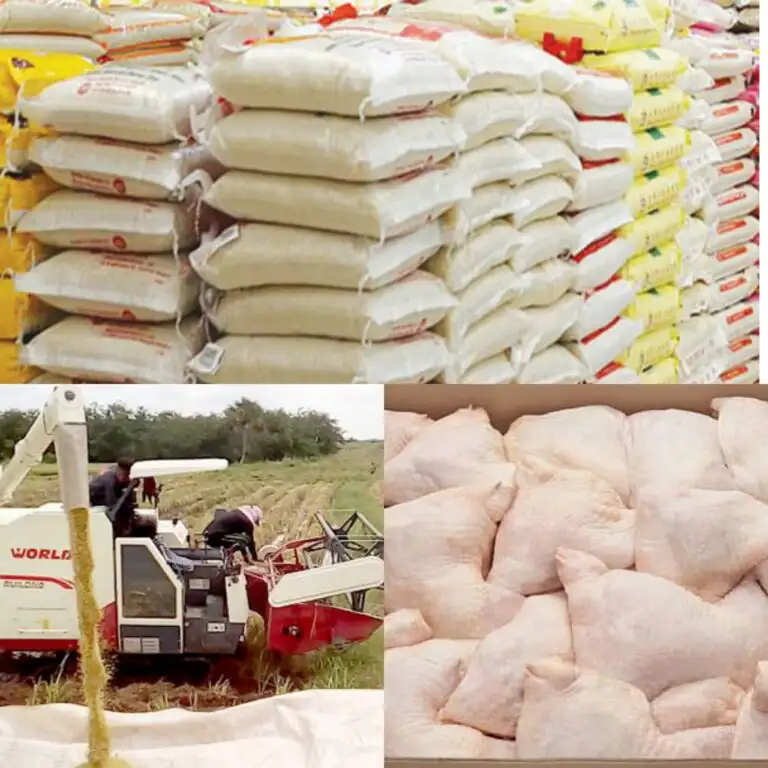
For the past two years, rice farmers in the Volta Region, Greater Accra and the northern belts have been battling gluts, with many unable to find storage for paddy rice. Visits to warehouses and milling centres in Asutuare and Dawa in the Greater Accra Region revealed thousands of tonnes of unsold local rice, while more remain unharvested on farms.
“If we decide to consume locally produced rice, where quality is good and price is competitive, we will create markets for processors, who will then buy more from farmers,” he explained.
He noted that Ghana is making investments in irrigation, improved seeds and milling capacity, but without deliberate local consumption, self-sufficiency will remain a dream.
“The consumer is part of the solution. If we choose local, we strengthen the entire chain,” he added.
Local Chicken Cheaper But Still Rejected
The situation in poultry is even worse, Mr. Acquaye said.
Despite growing local capacity, Ghana continues to import huge quantities of poultry. Studies by Agri-Impact show locally produced chicken is now at par with imported chicken and in some cases even cheaper.
“Poultry products are highly imported into the country despite growing local capacity at competitive or even lower prices. But consumers still have it in their minds to consume imported products,” he lamented.
He warned that this mindset, combined with excessive import licences, is killing domestic producers who are price-competitive.
GH¢2.94bn Spent On Food Imports
Data from the Ghana Statistical Service’s Annual International Merchandise Trade Statistics Report released in July 2026 backs his concerns. Processed cereal grains were Ghana’s largest food import, valued at GH¢2.94 billion, representing 8.1% of total food imports.
Frozen chicken was second at GH¢2.84 billion, while semi-milled rice was GH¢2.39 billion and broken rice another GH¢1.19 billion.
Mr. Acquaye believes government must align import licences with actual domestic production capacity and drive a national campaign for local consumption to unlock growth in both sectors.
Until that happens, he warned, the gap between policy, political will and political practice will continue to frustrate Ghana’s efforts to drastically reduce rice and poultry imports.
Source: http://TheGhanaianFarmer.com
Tags: Ghana Rice Farmers, Poultry Farmers, Agri-Impact, Food Imports, Buy Ghana Rice
DailyNewsFlash