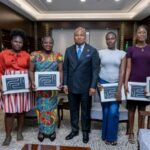



The High-Level Consultative Conference on the Next Steps to the Landmark United Nations Resolution regarding the Trafficking of Enslaved Africans commenced on the 18th of June, 2026, at the Kempinski Hotel Gold Coast City in Accra. This Consultative Conference convened Heads of State and Government, Ministers, International Organizations, Scholars, Legal Experts, Civil Society Organizations, and other participants from around the world to develop a practical roadmap for advancing reparatory justice following the adoption of United Nations Resolution A/RES/80/250. This resolution declared the transatlantic trafficking of enslaved Africans and the racialized chattel enslavement of Africans as the gravest crime against humanity.
During the keynote address, His Excellency John Dramani Mahama, the President of the Republic of Ghana and African Union Champion on Advancing the Cause of Justice and the Payment of Reparations, described the adoption of this landmark resolution as a pivotal moment in the international community’s recognition of the magnitude, brutality, and enduring impact of the trafficking of enslaved Africans and racialized chattel enslavement. He expressed his gratitude to the 123 Member States of the United Nations that voted in favor of the resolution and all stakeholders whose persistent efforts led to its adoption. President Mahama emphasized that Ghana’s leadership on this matter is a moral obligation shaped by the nation’s history and identity. He clarified that the objective is not to reopen old wounds but to heal them. He underscored that the pursuit of reparatory justice must be guided by truth, understanding, reconciliation, and constructive engagement.
Reflecting on Ghana’s unique position in the history of transatlantic enslavement, President Mahama noted that sites such as Cape Coast, Elmina and Osu Castles, Assin Manso, and others serve as reminders of one of humanity’s darkest chapters. He observed that while millions of Africans were forcibly removed through the “Doors of No Return,” their descendants have returned as leaders, scholars, jurists, activists, and global citizens, reaffirming the enduring bonds between Africa and its diaspora. He highlighted the gender dimension of slavery and urged that reparatory justice frameworks must adequately recognize the suffering, resilience, and contributions of women during this dark chapter.
Acknowledging the need for enhanced collaboration among all stakeholders, President Mahama announced the establishment of three global panels: the Global Advisory Panel on Reparative Justice, comprising Heads of State, eminent leaders, and public figures; the Expert Panel on the Restitution of Cultural Artefacts, to facilitate the return of cultural property and historical treasures to their rightful communities; and the Global Legal Panel on Reparative Justice, to explore legal pathways and strengthen international legal understanding on reparations. These panels will support efforts to advance truth-telling, research, education, memorialization, cultural restitution, and practical cooperation between Africa and its diaspora, as well as the broader international community. He stated that future generations would assess the present generation not by the resolutions adopted but by the progress achieved.
He extended a warm welcome to all participants and wished them productive deliberations leading to successful outcomes.