


By Daily News Flash | September 27, 2026
The Ministry of Fisheries and Aquaculture Development has rallied the Ghana Science Association (GSA) and the research community to work with the Ministry to develop practical, science-based solutions to protect Ghana’s ocean and secure livelihoods.
Mrs. Emelia Arthur, the Sector Minister, said scientists and researchers were needed to co-create digital solutions and systems to help transform the country’s Blue Economy, which faces serious threats from illegal mining, destructive fishing practices and other harmful environmental activities.
She, therefore, proposed the establishment of a joint technical body between the Ministry and the GSA to facilitate structured engagement on stock assessment, climate adaptation, coastal resilience and other critical areas.
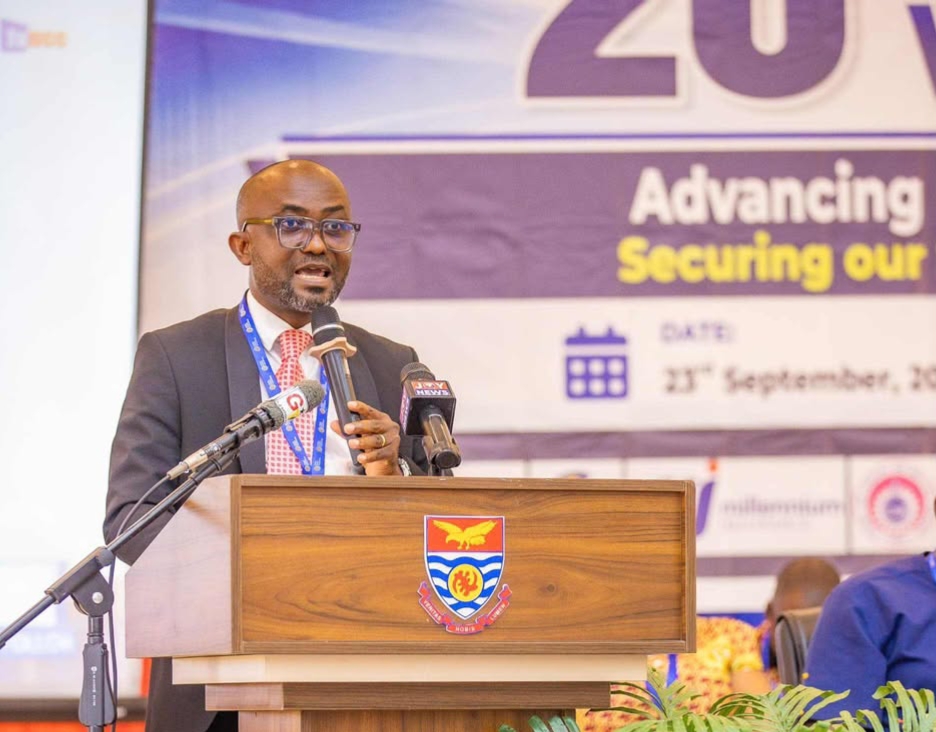
The Minister made the call in a statement delivered on her behalf by Mr. Fred Antwi, the Coordinator of the Ministry’s Blue Economy Secretariat, at GSA’s 20th biennial workshop organised in partnership with the Africa Ocean Institute (AOI) of the University of Cape Coast (UCC).
The workshop held on the theme: “Advancing Ghana’s Blue Economy: Securing our shores, feeding our future,” brought together scientists, researchers, policymakers, industry players, students and other stakeholders to discuss the future of Ghana’s Blue Economy.
The stakeholders raised the alarm over the hostile destruction of the environment including rivers, the ocean and the coasts principally through illegal mining and other activities and proposed solutions.
Mrs. Arthur stressed that transforming the Blue Economy cannot be achieved by government alone but requires strong partnerships with scientists, researchers and coastal communities.
She said the quest for a robust and viable sector must be guided by integration, innovation, inclusion and integrity.
The Minister challenged scientists and researchers to go beyond academic publications to translate their findings into clear, actionable policy recommendations that can be readily implemented by government.
She further advocated community-centred science, where fisherfolk and coastal communities are treated as partners whose practical knowledge complements formal research.
On blue justice, Mrs. Arthur said scientists must ensure their innovations promote fairness for women fish processors, youth, small-scale fishers and other vulnerable groups.
The Minister indicated that government has already initiated several actions, saying a high-level joint technical committee is preparing a cabinet memo to strengthen governance and protection of aquatic zones.
“To consolidate these gains, a draft Blue Economy Commission Bill prepared by the consultant Dr. Godwin Djokoto with UNDP funding has been finalised, technically reviewed by a 19-member intersectoral committee, and is now undergoing stakeholder engagement ahead of validation and submission to Cabinet and Parliament by October 2026,” she announced.
Dr. Selina Ama Saah, National President of GSA, underscored the urgent need to salvage the fisheries sector and save the ocean, indicating that a resilient Blue Economy could strengthen food security, reduce dependence on imported fish, create jobs and stimulate innovation in marine technologies.
She observed that the emergence of Artificial Intelligence, smart systems, advanced breeding technologies and other marine technologies could improve productivity and environmental protection.
“But technology alone will not solve our problems. We need appropriate policies, investment and infrastructure, skilled human resources, strong institutions, and collaboration among government, academia, industry and coastal communities,” she added.
Professor Benjamin B Campion, Executive Director of Fisheries Commission, reiterated the dangers faced by the fisheries sector and said the Commission cannot sustainably manage it alone.
“We therefore need continuous investment in fisheries science, stock assessment, fisheries data, ocean observation, digital technologies, climate science, aquaculture research and innovations that can translate directly into management decisions,” he appealed.
Prof. Mrs. Christine Adu-Yeboah, Acting Pro Vice Chancellor of UCC, commended the science association for demonstrating leadership and said the university must not be an ivory tower, but a solutions hub that directly impacts society.
Source: http://AccessAgric.com / By Prince Acquah, GNA